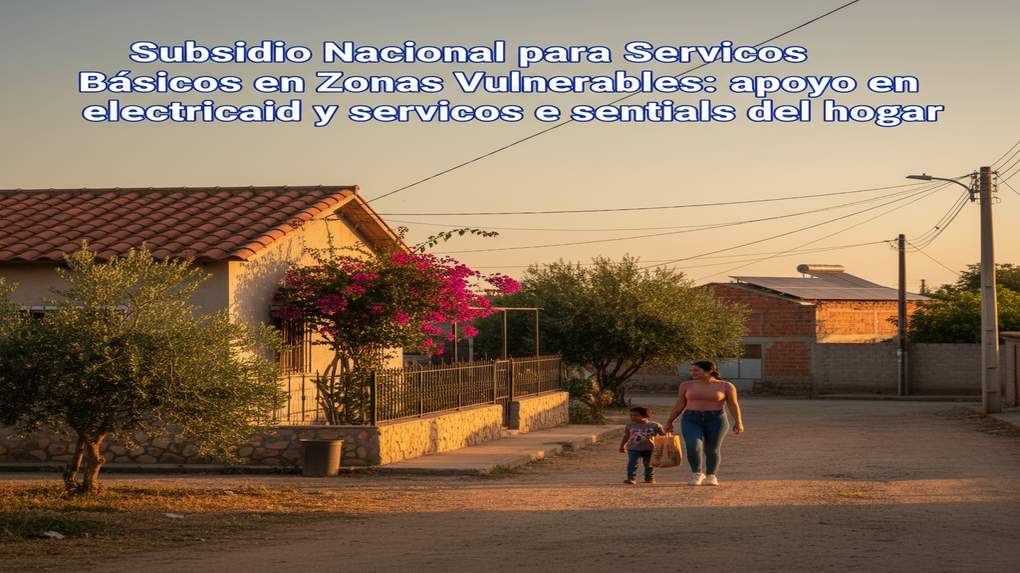
Fuente oficial: https://www.gob.mx/cfe
Here’s an SEO-optimized article on the «Subsidio Nacional para Servicios Básicos en Zonas Vulnerables,» focusing on electricity and essential household services.
Subsidio Nacional para Servicios Básicos en Zonas Vulnerables: Apoyo en Electricidad y Servicios Esenciales del Hogar
The rising cost of living can be especially challenging for vulnerable communities. In response, many countries offer national subsidies for basic services, aiming to ease the financial burden of electricity and other essential household needs. This article will explore the details of these subsidies, focusing on how they help families in vulnerable zones access affordable and reliable basic services, understand eligibility requirements, and navigate the application process.
¿Qué es el Subsidio Nacional para Servicios Básicos? 💡
The Subsidio Nacional para Servicios Básicos (National Subsidy for Basic Services) is a government program designed to **provide financial assistance to households in vulnerable areas** to help them afford essential services. These services typically include electricity, water, gas, and sometimes even internet access, depending on the specific program and country. The primary goal is to **ensure that all citizens have access to these fundamental necessities**, regardless of their economic situation.
This subsidy acts as a safety net, preventing families from falling behind on bills and ensuring a minimum quality of life. It’s particularly crucial in regions where poverty rates are high, and access to resources is limited. 💰
¿Quiénes Pueden Beneficiarse? Criterios de Elegibilidad 📝
Eligibility criteria vary depending on the specific program and the country implementing it, but some common factors are generally considered:
* **Income Level:** A primary criterion is household income. Subsidies are typically targeted toward families whose income falls below a certain threshold. This threshold is often defined as a multiple of the national poverty line or a specific income bracket.
* **Geographic Location:** Residents of designated «vulnerable zones» are often prioritized. These zones are typically areas with high poverty rates, limited access to essential services, or other socioeconomic challenges.
* **Household Size:** Larger households with more dependents may be eligible for higher subsidy amounts to reflect their increased needs.
* **Social Vulnerability:** Factors like disability, elderly household members, or single-parent households can also contribute to eligibility. These situations often indicate increased vulnerability and a greater need for assistance.
* **Registration in Social Programs:** Being registered in other social welfare programs may also be a requirement or automatically qualify a household for the subsidy.
It’s crucial to **check the specific requirements** for the program in your region to determine if you qualify. Contacting your local municipality or social services office is a good starting point. 🏘️
¿Cómo Solicitar el Subsidio? Paso a Paso ✍️
The application process usually involves several steps. Here’s a general outline:
1. **Gather Required Documents:** This typically includes proof of income (pay stubs, tax returns), proof of residence (utility bills, lease agreement), identification documents (national ID card, passport), and any documents related to social vulnerability factors (disability certificates, etc.).
2. **Locate the Application Form:** Application forms are usually available online through the government’s website, at local municipal offices, or at designated social service centers.
3. **Complete the Application Form:** Fill out the form accurately and completely, providing all requested information.
4. **Submit the Application:** Submit the completed application form along with all required documents to the designated office or through the online portal. Ensure you keep a copy of the application for your records.
5. **Await Notification:** After submitting the application, you will usually receive a notification acknowledging receipt. The application will then be reviewed, and you will be notified of the decision. This process can take some time, so be patient.
6. **Appeal Process:** If your application is denied, you usually have the right to appeal the decision. The notification will outline the appeal process and deadlines.
**Pro Tip:** Don’t hesitate to seek assistance from social workers or community organizations if you need help with the application process. They can provide guidance and support to ensure your application is complete and accurate. 👍
Impacto del Subsidio en la Calidad de Vida 🌟
The Subsidio Nacional para Servicios Básicos has a significant impact on the quality of life for vulnerable families. By reducing the financial burden of essential services, it allows families to **allocate their limited resources to other critical needs** such as food, healthcare, and education. This can lead to:
* **Improved Health Outcomes:** Consistent access to electricity allows for proper food storage and refrigeration, reducing the risk of foodborne illnesses. It also enables access to essential medical equipment and services.
* **Enhanced Educational Opportunities:** Electricity allows children to study at night and access online learning resources, improving their educational outcomes.
* **Increased Economic Stability:** By reducing the risk of falling behind on bills and accumulating debt, the subsidy helps families maintain their financial stability.
* **Greater Social Inclusion:** Access to basic services promotes social inclusion and reduces feelings of isolation and marginalization.
These benefits contribute to a more equitable society and a better future for vulnerable communities. 🌈
Desafíos y Mejoras Potenciales ⚙️
While the Subsidio Nacional para Servicios Básicos is a valuable program, it’s not without its challenges:
* **Limited Coverage:** The program may not reach all eligible households due to lack of awareness or administrative barriers.
* **Insufficient Funding:** The subsidy amount may not be sufficient to cover the full cost of essential services, particularly during periods of high inflation.
* **Administrative Complexity:** The application process can be complex and time-consuming, particularly for individuals with limited literacy or access to technology.
* **Potential for Abuse:** There is a risk of fraudulent claims or misuse of funds.
To improve the effectiveness of the program, several measures can be taken:
* **Increase Awareness:** Conduct targeted outreach campaigns to inform eligible households about the program and how to apply.
* **Streamline the Application Process:** Simplify the application form and offer online application options.
* **Increase Funding:** Allocate sufficient funding to ensure the subsidy amount is adequate to meet the needs of vulnerable families.
* **Strengthen Oversight:** Implement robust monitoring and auditing mechanisms to prevent fraud and abuse.
* **Regular Evaluation:** Conduct regular evaluations to assess the program’s impact and identify areas for improvement.
By addressing these challenges, the Subsidio Nacional para Servicios Básicos can become an even more effective tool for promoting social equity and improving the lives of vulnerable communities. 🤝
The Subsidio Nacional para Servicios Básicos plays a vital role in supporting vulnerable communities by ensuring access to essential services like electricity. Understanding the eligibility criteria, application process, and potential challenges is crucial for both those seeking assistance and policymakers aiming to improve the program’s effectiveness, leading to a more equitable society.
Si deseas más información visita el sitio oficial: aquí.